

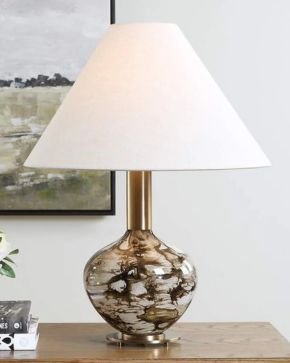
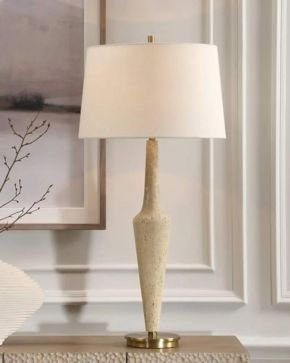
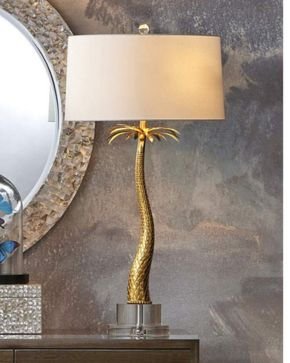
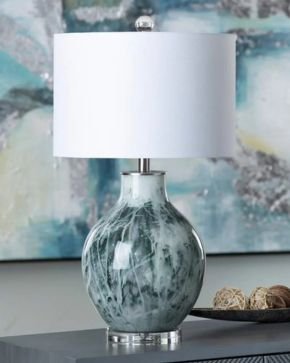
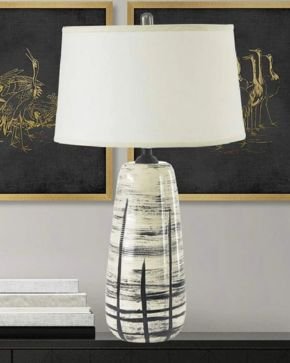
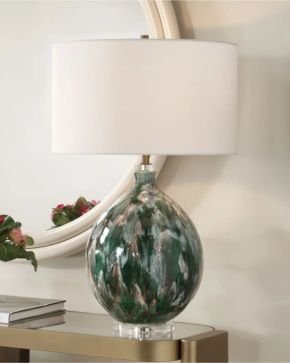
 The console table is one of interior design’s most demanding surfaces. It’s narrow, often pushed against a wall, and visible from multiple angles—every object on it has to earn its place. The console table lamp is the most important object on most consoles because it does what nothing else can: it illuminates the surface, anchors the vignette, and signals to anyone walking past that the space has been considered.
This guide from Lume Art Gallery covers the console table lamp in detail—proportions, placement, materials, the difference between entryway and behind-sofa applications, and the styling moves that turn a blank console into a focal point.
Console Table Lamps vs. Standard Table Lamps
Most console tables are 28 to 32 inches wide, often closer to 12 to 16 inches deep—significantly narrower than a typical end table. That narrow depth changes which lamp shapes work. Standard 24-inch table lamps with wide drum shades often hang over the edge of a console, casting awkward shadows and making the console look smaller than it is. Console table lamps tend to share characteristics that solve this:
-
- Narrow base—ideally under 6 inches in diameter so the lamp doesn’t overhang the console depth.
-
- Tall, vertical silhouette—typically 26–34 inches tall, drawing the eye upward and balancing the horizontal length of the console.
-
- Modest shade diameter—usually no wider than the lamp’s height divided by three; oversized shades visually dominate the narrow surface.
-
- Substantial visual weight—ceramic, marble, or metal bases read more ‘present’ on a console than glass or thin metal. Substance helps the lamp anchor the surface.
Two Different Console Applications
Entryway Console
The entryway console table lamp does a particular job: it produces a welcoming first-impression glow and signals the home’s design language to anyone arriving. Place a pair flanking a mirror—one of the most reliable entryway moves in design. For a single-lamp setup, position the lamp toward one end of the console with a tall sculpture or stack of books at the other end to balance the visual weight.
Behind-Sofa Console
In open-plan living rooms, a sofa table behind a freestanding sofa creates a useful surface for lamps and decor. Console lamps here serve practical purposes—reading-friendly light at the right height for someone seated on the sofa—alongside their decorative role. A pair of medium-tall console lamps (28–30 inches) along the table reads as both lighting and architecture.
Hallway Console
In long hallways, a console with a single lamp every 6 to 8 feet creates the layered, intentional feel of a hotel corridor. Place lamps at this distance, with art on the wall above, to create a rhythm of vignettes. For sculptural variety, alternate with pieces from our sculpture range to break the repetition.
Living Room Console
Beneath a wall-mounted television or in front of a long bare wall, a console with a pair of lamps adds the kind of grounded weight that pure wall-mounted decor can’t. Layer with a floor lamp span data-contrast=”auto” piece nearby for a fully developed lighting scheme.
Choosing the Right Lamp Height
The single most useful console lamp rule: the top of the lampshade should sit about 60 to 66 inches from the floor—roughly eye level for a person standing in front of the console. This means lamp height is determined by console height. For a 30-inch tall console, a 30-inch lamp is appropriate; for a 34-inch console, a 28-inch lamp works better. The combined height of the console and lamp should land in that 60–66 inch sweet spot.
If the console will sit beneath a piece of art, allow at least 8 inches of clear space between the top of the lampshade and the bottom of the artwork. Less than that, and the lamp visually crowds the art.
Materials That Work on Consoles
-
- Ceramic and stoneware—the most versatile. Glazed ceramic in cream, deep blue, sage, or matte black anchors a console without visual heaviness.
-
- Marble and stone are particularly elegant on consoles because the substantial material gives the lamp visual weight. Pair with our
Carrara marble cylindrical luxury table lamp for a coordinated stone-anchored look.
-
- Brass and antique metal are classic for entryway consoles. Brass photographs beautifully against dark or wallpapered walls.
-
- Glass and crystal preserve visual lightness in narrow rooms; they are ideal where you don’t want the lamp to dominate the console’s silhouette.
-
- Wood—turned walnut or oak bases bring warmth without heaviness; they suit organic and Scandinavian interiors.
-
- Sculptural figural—animal or figural lamps from our
Animal lamps collection—including the elephant table lamp—turn a console into a gallery vignette.
Styling the Console Around the Lamp
Console styling typically follows a three-zone rule: a lamp on one side, a mid-weight object in the middle, and a smaller object on the other side. For pairs of lamps, the midsection becomes the centerpiece—a vase, a tray, a sculpture, or a stack of art books. A few principles for getting it right:
-
- Vary heights deliberately.
If your lamps are 30 inches tall, the centerpiece should be 12–18 inches—clearly lower so the lamps frame it without competition.
-
- Use odd-number compositions for asymmetric consoles.
If you’re not using a matched pair, group three or five objects: a single lamp plus two or four other items at varying heights.
-
- Don’t crowd.
Console tables look better with deliberate space than with surfaces fully covered. Leave at least 4 inches between objects.
-
- Layer art behind.
A console without art above feels incomplete. Hang art so the bottom edge sits about 6–10 inches above the lampshade’s top.
-
- Hide the cord.
Cords trailing down the front of a console are the fastest way to undo good styling. Use cord channels or velcro to route along the console’s rear edge.
Sizing for Specific Console Lengths
-
- Short consoles (under 36 inches)—use a single lamp at one end with one other object balancing it. Two lamps will overcrowd a short console.
-
- Medium consoles (36–60 inches)—a pair of lamps with a small centerpiece between them is the most reliable arrangement.
-
- Long consoles (60–84 inches)—a pair of lamps with two distinct vignettes between (e.g., a centerpiece plus a smaller object) creates rhythm without clutter.
-
- Very long consoles (84+ inches)—consider three lamps along the length, evenly spaced, with art or vignettes between. This is most often seen in grand hallways and entryways.
If you’d like a personal recommendation for your console, our team is happy to help via Contact. Browse the wider table lamp collection or our shop to start narrowing down by silhouette and material.
Final Thoughts
A console table lamp does more lighting work than its size suggests. It illuminates a surface most people only walk past, anchors a vignette, and signals taste before anyone steps further into the room. Choose a narrow base, appropriate height, and substantial material—and your console lamp will outperform a more expensive but ill-proportioned standard lamp every time. Layer art above and sculptural decor below, and you’ll have one of the most photographed surfaces in the house.
Frequently Asked Questions
What height lamp goes on a console table?
The top of the lampshade should sit about 60 to 66 inches from the floor—roughly eye level for a person standing in front of the console. This means lamp height depends on console height: a 30-inch console pairs with a 30-inch lamp; a 34-inch console pairs with a 28-inch lamp. The combined height should land in that sweet spot.
Should console lamps come in pairs?
Often yes, but not always. On medium and long consoles (36 inches and up), pairs flanking a centerpiece look most polished. On short consoles under 36 inches, a single lamp paired with one other object often works better — two lamps would overcrowd the surface. Asymmetric single-lamp arrangements also work well in modern, less formal interiors.
What size lampshade fits a console table?
Console lamp shades should typically be no wider than one-third the lamp’s total height. For a 30-inch lamp, a shade around 10 to 12 inches in diameter is appropriate. Oversized shades make the lamp look top-heavy on the narrow console’s depth and can cast harsh shadows on the wall behind.
Can I put a regular table lamp on a console?
You can, but consoles work better with lamps designed for narrow surfaces—taller, slimmer profiles with smaller bases. Standard table lamps with wide drum shades often overhang the console edge, casting awkward shadows. If using a standard lamp, look for ones with bases under 6 inches in diameter.
How do I hide the cord on a console lamp?
Three reliable methods: route the cord along the back edge of the console using adhesive cord channels, use a cord cover sleeve in a finish matching the console legs, or place the console close enough to a wall outlet that the cord disappears immediately behind the table. Cords visible on the front of a console undo otherwise good styling.