

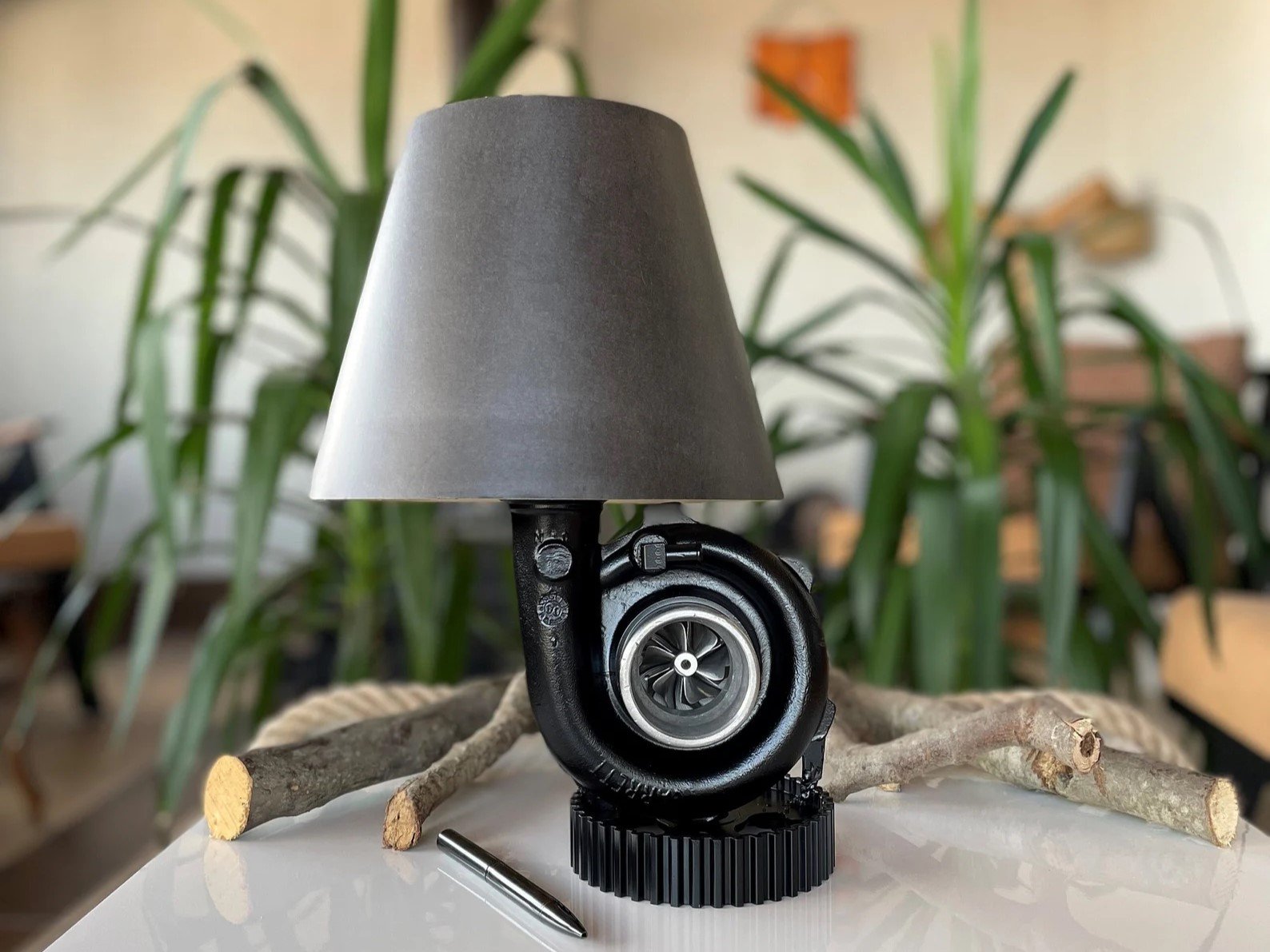
Industrial style lighting transformed interiors in the early 2010s and never fully left. Born from converted-loft aesthetics in New York and Brooklyn, the look celebrates raw materials, exposed hardware, and the visible mechanical components that earlier decorative styles disguised. Industrial table lamps and metal table lamps cover a range from strict factory-floor reproduction to softer industrial-modern transitional styling. This guide covers what defines industrial lighting, the metals and components that signal authenticity, when to use industrial in non-loft homes, and how to keep the style feeling current rather than dated.
What Defines Industrial Style
Industrial design emerged from the 1990s and 2000s loft-conversion movement, when former factory and warehouse buildings were renovated into residential spaces. The aesthetic celebrated existing industrial features — exposed brick, visible ductwork, raw concrete floors, steel beams — rather than disguising them. Lighting evolved to match: lamps that referenced factory floor fixtures, warehouse work lights, and early-20th-century commercial lighting.
Three principles distinguish industrial lighting from other styles. First, exposed mechanical components. Visible bulbs (often Edison-style filament bulbs), exposed wiring (sometimes in fabric-covered cord), uncovered sockets, and cage-style bulb guards are features rather than flaws.
Second, raw or aged metal. Black iron, raw steel, oil-rubbed bronze, and patinated brass dominate. Polished chrome and lacquered metal don’t fit the aesthetic. The metal often shows visible welds, rivets, and tool marks rather than smooth machined finishes.
Third, references to functional fixtures. Pipe-fitting bases, gear elements, factory-style swing arms, and warehouse pendant shapes recur across industrial lighting. The lamps look like they were repurposed from working factory equipment, even when they’re new manufacture.
Edison Bulbs and Exposed Hardware
Edison-style filament bulbs are the single most identifiable industrial lighting feature. The exposed visible filament — a coiled, looped, or spiral wire glowing inside clear glass — references early electric lighting from before frosted glass and shaded fixtures became standard. The warm, slightly amber light Edison bulbs produce contributes to the atmospheric quality of industrial interiors.
Modern Edison bulbs come in three categories. Traditional incandescent Edison bulbs use actual heated filaments; they’re closest to historical accuracy, but inefficient and short-lived (1,000-2,000-hour lifespan). LED Edison bulbs replicate the look using LED filament strips inside clear glass — much more efficient, longer-lasting (15,000-25,000 hours), and now visually nearly indistinguishable from traditional Edison bulbs at moderate viewing distance. Smart Edison bulbs add app-controllable dimming and color temperature adjustment.
Exposed hardware extends beyond bulbs. Visible socket assemblies (brass, black, or oil-rubbed bronze), fabric-covered cord visible against the lamp base, exposed switch toggles, and uncovered cage-style bulb guards all contribute to the industrial visual language. The cleaner alternative — sleek concealed hardware — would undermine the entire aesthetic.
Industrial Materials: Cast Iron, Steel, Aged Brass
The industrial metal palette is narrower than other lamp styles. Cast iron and black steel anchor the structural elements — bases, stems, hardware, and. Aged brass and patinated brass bring warmth to harder iron and steel surfaces. Bronze and oil-rubbed bronze appear as alternative dark metal options.
Avoid polished chrome, polished nickel, gold-plated finishes, and lacquered metals in strict industrial interiors. These read as too refined for the factory-derived aesthetic. The industrial palette wants honest metal in aged, raw, or matte states.
Stone elements — particularly raw concrete and weathered marble — see our stone table lamps guide — pair beautifully with industrial metal. The contrast between cool industrial metal and natural stone creates the kind of material conversation that elevates industrial styling beyond strict factory reference. Reclaimed wood — particularly weathered barn wood — offers a warm, natural counterpoint to industrial metal.
Industrial Lamps in Lofts vs. Transitional Homes
Industrial lamps work hardest in loft conversions and modern industrial-design homes where the architecture supports the aesthetic. Exposed brick walls, visible ductwork, concrete floors, and metal-frame windows all complement industrial lighting. In these settings, industrial lamps blend with the broader interior style.
In transitional homes, industrial lamps work as accent pieces — bringing edge and visual interest to otherwise softer interiors. A single industrial table lamp on a console table in a contemporary living room reads as collected and intentional. Multiple industrial pieces in the same room start to read as themed, particularly in homes without supporting industrial architecture. See our rustic lamps guide for parallel principles on rustic-industrial mixing.
In strict modern interiors, industrial lamps create deliberate textural contrast. The roughness of patinated metal and exposed bulbs contrasts with smooth modern surfaces, breaking up what could otherwise read as cold or sterile. One industrial lamp in a modern living room often does the work of multiple decorative elements in adding warmth and character.
Featured Industrial-Compatible Lamps from Lume Art Gallery
While Lume Art Gallery’s primary focus is sculptural and decorative lighting rather than dedicated industrial reproduction, several pieces work in industrial and industrial-modern interiors. The Ram Skull Table Lamp brings dark sculptural styling that pairs beautifully with industrial metal and exposed-brick interiors. The Amber Lamp uses polished brass with stained glass — material combinations that complement industrial pieces in eclectic transitional interiors.
For pure industrial styling, look at the lamps hub for metal-based options and floor lamp companion pieces in the floor lamps category. The sculpture range includes mixed-material pieces that complement industrial lighting in eclectic interiors. Contact us for sourcing on specific industrial finishes or styles.
Pairing Industrial Lamps with Other Materials
Industrial lamps pair best with three material categories. Reclaimed wood — particularly barn wood, live-edge slabs, and weathered teak — provides organic warmth that balances industrial metal. The combination of rough wood and aged metal is one of the defining material pairings in industrial-modern design.
Concrete and stone (raw or polished) bring architectural gravitas that complements industrial lighting. A black iron lamp on a polished concrete side table or weathered concrete plinth creates the kind of monolithic styling that defines high-end industrial interiors.
Leather — particularly distressed brown leather — adds tactile warmth alongside industrial metal. Industrial-style chairs, sofas, and accessories in leather pair naturally with an industrial table and floor lamps.
Avoid pairing industrial lamps with overly refined materials — silk, lacquered surfaces, polished chrome, ornate carved wood. The contrast in surface quality reads as accidental rather than deliberate. Linen, canvas, raw cotton, and natural wool work as upholstery materials in industrial interiors; silk and velvet do not.
Avoiding Over-Industrial Decor
Industrial lighting reached saturation in the late 2010s and has since refined toward more restrained applications. The biggest industrial styling mistake today is going too literal — every lamp featuring exposed bulbs, every surface in raw metal, every shade replaced with a metal cage. The result reads as themeda restaurant rather than a home.
Current industrial styling uses one or two industrial elements as accents within otherwise transitional interiors. A single industrial table lamp paired with otherwise contemporary or traditional furnishings reads as collected; six industrial lamps across the same room read as overdone.
Color discipline also helps. Industrial palettes run dark — black, charcoal, oxidized metal tones, deep brown leather. Adding even a single saturated warm color (a single accent chair in olive or rust, a wool throw in burgundy) prevents the room from feeling cold. Pure industrial without warmth tends to feel uninhabited.
Frequently Asked Questions
Are industrial table lamps still trendy? The peak industrial trend (2012-2018) has cooled, but industrial lamps remain in active use as accent pieces in transitional, modern, and loft interiors. Current industrial styling leans toward restraint and material quality rather than the saturated warehouse aesthetic of peak years. As a baseline metal-and-Edison-bulb category, industrial lighting remains a steady design choice.
What kind of bulb works best for industrial lamps? Edison-style filament bulbs — particularly LED versions that combine vintage appearance with modern efficiency and lifespan — are the standard choice. For warm atmospheric light, choose 2200K to 2700K bulbs (very warm to warm white). For more functional task lighting, 3000K bulbs work without breaking the visual aesthetic. Avoid daylight-temperature (5000K+) bulbs in industrial interiors — the cold color temperature undermines the warmth that industrial styling needs.
Can I use industrial lamps in a traditional home? Yes, in moderation. A single industrial table lamp can act as a textural counterpoint in an otherwise traditional interior — providing visual edge that prevents the space from reading as overly formal. Pair carefully: industrial pieces work better with transitional and eclectic traditional rooms than with strict period-correct formal interiors.
How do I clean an industrial metal lamp? Light dusting with a soft cloth handles most maintenance. For aged or patinated metal, avoid wet cleaning entirely — water can speed unwanted corrosion or strip aged finishes. For raw or living-finish metal, occasional application of paste wax (museum-grade microcrystalline wax) prevents further corrosion without altering appearance. For lacquered or sealed industrial pieces, standard furniture polish maintains the finish.